
Copy of Child Health Simulator 1
Quiz Summary
0 of 50 Questions completed
Questions:
Information
You have already completed the quiz before. Hence you can not start it again.
Quiz is loading…
You must sign in or sign up to start the quiz.
You must first complete the following:
Results
Results
0 of 50 Questions answered correctly
Your time:
Time has elapsed
You have reached 0 of 0 point(s), (0)
Earned Point(s): 0 of 0, (0)
0 Essay(s) Pending (Possible Point(s): 0)
Categories
- Not categorized 0%
- 1
- 2
- 3
- 4
- 5
- 6
- 7
- 8
- 9
- 10
- 11
- 12
- 13
- 14
- 15
- 16
- 17
- 18
- 19
- 20
- 21
- 22
- 23
- 24
- 25
- 26
- 27
- 28
- 29
- 30
- 31
- 32
- 33
- 34
- 35
- 36
- 37
- 38
- 39
- 40
- 41
- 42
- 43
- 44
- 45
- 46
- 47
- 48
- 49
- 50
- Current
- Review / Skip
- Answered
- Correct
- Incorrect
-
Question 1 of 50
1. Question
The nurse is caring for a child with a fracture who is placed in skeletal traction. The nurse would monitor for which sign of a serious complication associated with this type of traction?
CorrectIncorrect -
Question 2 of 50
2. Question
The nurse is providing instructions to the parents of a child with scoliosis regarding the use of a brace. Which statement by a parent indicates a need for further teaching?
CorrectIncorrect -
Question 3 of 50
3. Question
The nurse provides instructions to the parents of an infant with hip dysplasia regarding care of the Pavlik harness. Which statement by one of the parents indicates an understanding of the use of the harness?
CorrectIncorrect -
Question 4 of 50
4. Question
The nurse is assisting a primary health care provider (PHCP) during the examination of an infant with developmental hip dysplasia. The PHCP performs the Ortolani maneuver. The nurse determines that the infant exhibits a positive response to this maneuver if which finding is noted?
CorrectIncorrect -
Question 5 of 50
5. Question
The nurse is reinforcing instructions to the parent of a child who has a plaster cast applied to the left arm. Which statement by the parent indicates a need for further teaching?
CorrectIncorrect -
Question 6 of 50
6. Question
An adolescent is seen in the emergency department for a suspected sprain of the ankle. X-rays have been obtained, and a fracture has been ruled out. Which instruction would the nurse provide to the adolescent regarding home care for treatment of the sprain?
CorrectIncorrect -
Question 7 of 50
7. Question
The nurse is caring for a child who fractured the ulna bone and had a cast applied 24 hours ago. The child tells the nurse that the arm feels like it is falling asleep. Which nursing action is appropriate?
CorrectIncorrect -
Question 8 of 50
8. Question
The nurse is implementing a teaching plan for a 4-month-old child who has been diagnosed with developmental dysplasia of the hip. The child will be placed in the Pavlik harness. Which statement by the family indicates that they understand the care of their child while placed in the Pavlik harness?
CorrectIncorrect -
Question 9 of 50
9. Question
The nurse is reviewing the health care record of an infant suspected of having unilateral hip dysplasia. Which assessment finding would the nurse expect to note documented in the infant’s record regarding this condition?
CorrectIncorrect -
Question 10 of 50
10. Question
A child with developmental dysplasia of the hip is placed in a Pavlik harness. The nurse would demonstrate to the parents how to place the child in this harness by placing the child’s legs in which position?
CorrectIncorrect -
Question 11 of 50
11. Question
Russell’s traction is prescribed for a child with a lower leg fracture. The parent of the child asks the nurse about the purpose of the traction. The nurse explains to the parent that which is the primary action of this type of traction?
CorrectIncorrect -
Question 12 of 50
12. Question
A child has just returned from surgery and has a hip spica cast. What is the nurse’s priority action for this client?
CorrectIncorrect -
Question 13 of 50
13. Question
A 9-year-old child fractures the left tibia along an epiphyseal line while using a skateboard. What is the nurse’s priority concern during future growth?
CorrectIncorrect -
Question 14 of 50
14. Question
The nurse has reinforced teaching for a parent and a school-age child who was given a brace to wear for the treatment of scoliosis. The nurse determines that the child needs further teaching if the child makes which statement?
CorrectIncorrect -
Question 15 of 50
15. Question
A child with cerebral palsy is in a management program to achieve maximum potential for locomotion, self-care, and socialization in school. The nurse works with the child to meet these goals by performing which action?
CorrectIncorrect -
Question 16 of 50
16. Question
An infant is brought to the child care clinic for a follow-up visit. The nurse notes that the infant is wearing this apparatus. The nurse documents that the infant is wearing which device? Refer to figure.
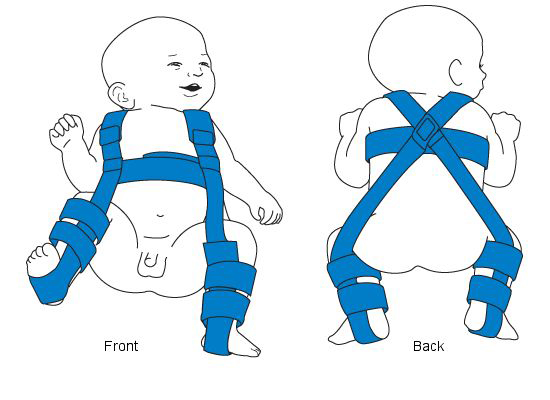 CorrectIncorrect
-
Question 17 of 50
17. Question
The parent of a 5-year-old child brings the child to the hospital emergency department and tells the nurse that the child fell. A fracture is suspected, and a radiograph is taken. The results indicate that the child has a comminuted fracture. The parent asks the nurse to describe this type of fracture, and the nurse draws a picture for the parent. Which picture identifies this type of fracture? See the image to indicate your answer.
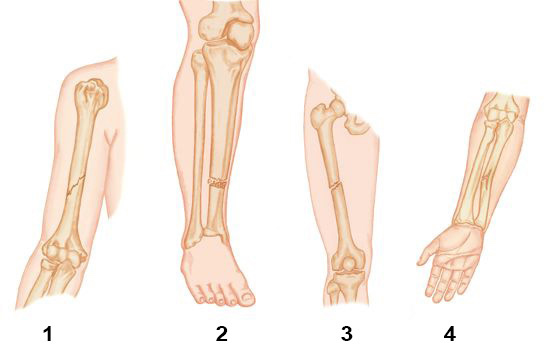 CorrectIncorrect
-
Question 18 of 50
18. Question
The pediatric nurse educator provides a teaching session to the nursing staff regarding juvenile idiopathic arthritis (JIA). Which action by a nursing staff member in the care of a child with JIA indicates a need for further education?
CorrectIncorrect -
Question 19 of 50
19. Question
A child must wear a brace for correction of scoliosis. The nurse creates a plan of care, knowing the child is at risk for which problem?
CorrectIncorrect -
Question 20 of 50
20. Question
A child who sustained a fractured ankle has a short leg cast applied, and the nurse provides home care instructions to the parent. The parent returns to the emergency department 16 hours later because the child is complaining of severe pain. The nurse notes that the child’s toes are cool, pale, and puffy, and that the child is agitated and crying loudly. The parent states, “I gave her the pain medication you sent with us just like you told us, and I have kept her foot up on two pillows since we left, except when she gets up to go to the bathroom. I don’t understand why she hurts so much. Do something!” What is the most likely clinical situation that occurred?
CorrectIncorrect -
Question 21 of 50
21. Question
A child sustains a fall at home and is brought to the hospital emergency department by the child’s parent. After a radiographic examination, the child is determined to have a fractured arm, and a plaster cast is applied. The nurse provides instructions to the parent regarding neurocirculatory assessment and function. Which statement by the parent indicates a need for further instruction?
CorrectIncorrect -
Question 22 of 50
22. Question
A neighborhood nurse is attending a soccer game at a local middle school. One of the students falls off the bleachers and sustains an injury to the left arm. The nurse quickly attends to the child and suspects that the child’s arm may be broken. Which nursing action would be the priority before transferring the child to the hospital emergency department?
CorrectIncorrect -
Question 23 of 50
23. Question
An alert child who is crying loudly is brought to the hospital emergency department for a simple fracture to the lower right arm that occurred after a fall off a bicycle. What is the nurse’s priority assessment?
CorrectIncorrect -
Question 24 of 50
24. Question
The nurse prepares a list of home care instructions for the parents of a child who has a plaster cast applied to the left forearm. Which instructions would be included on the list? Select all that apply.
CorrectIncorrect -
Question 25 of 50
25. Question
A child is placed in skeletal traction for treatment of a fractured femur. The nurse creates a plan of care and would include which intervention?
CorrectIncorrect -
Question 26 of 50
26. Question
A child has a right femur fracture caused by a motor vehicle crash and is placed in skin traction temporarily until surgery can be performed. During assessment, the nurse notes that the dorsalis pedis pulse is absent on the right foot. Which action would the nurse take?
CorrectIncorrect -
Question 27 of 50
27. Question
The nurse is talking to the parents of a child newly diagnosed with diabetes mellitus. Which statement by the parents indicates an understanding of preventing and managing hyperglycemia?
CorrectIncorrect -
Question 28 of 50
28. Question
The nurse is caring for an infant with gastroenteritis who is being treated for dehydration. The nurse reviews the health record and notes that the primary health care provider has documented that the infant is mildly dehydrated. Which assessment finding would the nurse expect to note in mild dehydration?
CorrectIncorrect -
Question 29 of 50
29. Question
A student nurse is caring for a hospitalized child who has hypotonic dehydration. Which serum sodium level would the student expect to observe?
CorrectIncorrect -
Question 30 of 50
30. Question
The nurse provides instructions to the adolescent regarding the administration of insulin. The nurse would include which instruction?
CorrectIncorrect -
Question 31 of 50
31. Question
An adolescent with type 1 diabetes mellitus has been chosen for the school’s cheerleading squad. The adolescent visits the school nurse to obtain information regarding adjustments needed in the treatment plan for diabetes. What would the school nurse instruct the student to do?
CorrectIncorrect -
Question 32 of 50
32. Question
The nurse is caring for a hospitalized child who is receiving a continuous infusion of intravenous potassium for the treatment of dehydration. Which assessment finding requires the need to notify the primary health care provider?
CorrectIncorrect -
Question 33 of 50
33. Question
A nurse is caring for an infant with a respiratory infection and is monitoring the infant for signs of dehydration. What is the nurse’s best action to determine fluid loss in the infant?
CorrectIncorrect -
Question 34 of 50
34. Question
An adolescent with type 1 diabetes mellitus is attending a dance in the school gym. The adolescent suddenly becomes flushed and complains of hunger and dizziness. The school nurse, who is present at the dance, takes the child to the nurse’s office and performs a blood glucose level test that shows 60 mg/dL (3.4 mmol/L). Which is the initial nursing intervention?
CorrectIncorrect -
Question 35 of 50
35. Question
A client is examined in the hospital emergency department after taking an overdose of acetylsalicylic acid. The client has rapid breathing, nausea and vomiting, and lethargy. The primary health care provider prescribes arterial blood specimens for blood gas analysis to be drawn. Aspirin toxicity is suspected when the blood gas results are reported as which value?
CorrectIncorrect -
Question 36 of 50
36. Question
The clinic nurse is assessing a child for dehydration. The nurse determines that the child is moderately dehydrated if which finding is noted on assessment?
CorrectIncorrect -
Question 37 of 50
37. Question
The nurse is teaching the parent of a preschool child how to administer the child’s insulin injection. The child will be receiving 2 units of Humulin R insulin and 12 units of Humulin N insulin every morning. How would the nurse instruct the parents to prepare the insulin?
CorrectIncorrect -
Question 38 of 50
38. Question
An adolescent with diabetes receives 30 units of Humulin N insulin at 7:00 a.m. The nurse would monitor for a hypoglycemic episode at what time?
CorrectIncorrect -
Question 39 of 50
39. Question
The nurse is teaching the parents of a child with growth hormone deficiency about preparing synthetic growth hormone and administering it to the child. Which statement, if made by the parents, would indicate an understanding of the procedure?
CorrectIncorrect -
Question 40 of 50
40. Question
The home care nurse is visiting a child newly diagnosed with diabetes mellitus. The nurse is instructing the child and parents regarding actions to take if hypoglycemic reactions occur. The nurse would tell the child to take which action?
CorrectIncorrect -
Question 41 of 50
41. Question
A child’s fasting blood glucose levels range between 100 and 120 mg/dL (5.7 and 6.9 mmol/L) daily. The before-dinner blood glucose levels are between 120 and 130 mg/dL (6.9 and 7.4 mmol/L), with no reported episodes of hypoglycemia. Mixed insulin is administered before breakfast and before dinner. The nurse would make which interpretation about these findings?
CorrectIncorrect -
Question 42 of 50
42. Question
A 6-year-old child with diabetes mellitus and the child’s parent come to the health care clinic for a routine examination. The nurse evaluates the data collected during this visit to determine whether the child has been euglycemic since the last visit. Which information is the most significant indicator of euglycemia?
CorrectIncorrect -
Question 43 of 50
43. Question
A home care nurse is teaching an adolescent with type 1 diabetes mellitus about insulin administration and rotation sites. Which statement, if made by the adolescent, would indicate effective teaching?
CorrectIncorrect -
Question 44 of 50
44. Question
A pediatric nurse educator provides a teaching session to the nursing staff regarding phenylketonuria. Which statement would the nurse educator include in the session?
CorrectIncorrect -
Question 45 of 50
45. Question
The nurse would implement which interventions for a 10-year-old child with type 1 diabetes mellitus who has a blood glucose level of 60 mg/dL (3.4 mmol/L)? Select all that apply.
CorrectIncorrect -
Question 46 of 50
46. Question
A parent brings a 3-week-old infant to a clinic for a phenylketonuria rescreening blood test. The test indicates a serum phenylalanine level of 1 mg/dL (60.5 mcmol/L). The nurse reviews this result and makes which interpretation?
CorrectIncorrect -
Question 47 of 50
47. Question
A primary health care provider prescribes an intravenous (IV) solution of 5% dextrose and half-normal saline (0.45%) with 40 mEq of potassium chloride for a child with hypotonic dehydration. The nurse performs which priority assessment before administering this IV prescription?
CorrectIncorrect -
Question 48 of 50
48. Question
A 2-year-old child is admitted to a hospital burn unit with partial- and full-thickness burns involving 35% of body surface area. After admission assessment and review of the primary health care provider’s prescriptions, the priority nursing intervention would focus on which action?
CorrectIncorrect -
Question 49 of 50
49. Question
The nurse is providing a yearly summer educational session to parents in a local community. The topic of the session is prevention and treatment measures for poison ivy. The nurse instructs the parents that if the child comes into contact with poison ivy to take which action?
CorrectIncorrect -
Question 50 of 50
50. Question
The nurse is developing a plan of care for a 10-year-old with an exacerbation of eczema. Which problem would be addressed in the care for this child?
CorrectIncorrect