
Gastrointestinal Medications
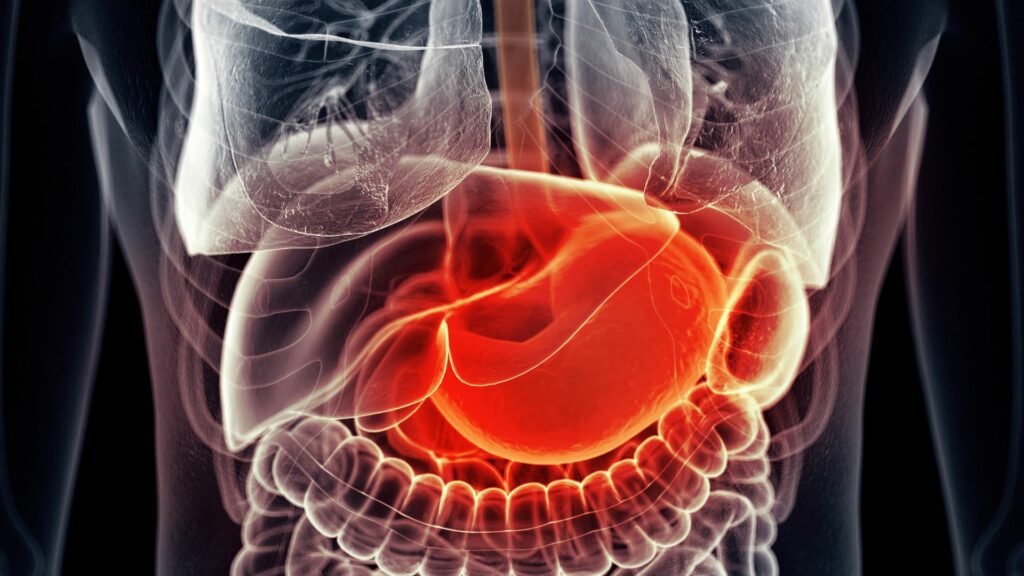
The GI tract is a complex system that includes the esophagus, stomach, small intestine, large intestine (colon), and rectum. The digestive system breaks down food into smaller molecules that the body can absorb.
Proton pump inhibitors are a class of drugs that act directly on the H +/K+/ATPase pump to prevent secretion of acid. They are indicated for GERD, peptic ulcer disease, treatment of gastritis and for gastrinomas, such as Zollinger-Ellison syndrome. These drugs are easy to remember, as they share a common suffix, “prazole,” exemplified by the medication omeprazole. Common side effects of these medications include hip fracture, as this drug class decreases calcium absorption, as well as pneumonia, due to bacterial overgrowth in a less acidic environment.
Omeprazole is a proton pump inhibitor (ppi) that suppresses the production of gastric acid by inhibiting the proton pump in the parietal cells of the stomach. In most hospitalized clients without a history of gerd or ulcers, ppis are prescribed to prevent stress ulcers from developing during surgery or a major illness.
Long-term use of ppis (prazoles – omeprazole, lansoprazole, pantoprazole, rebeprazole) has been associated with decreased bone density (calcium malabsorption) and increased risk for c difficile-associated diarrhea and pneumonia.
Cimetidine and Famotidine (H2 Receptor Blockers)
The drugs cimetidine and famotidine are histamine 2 receptor antagonists, which is a class of drugs used to prevent or treat peptic ulcer disease. Generally, these drugs are indicated for managing gastric and duodenal ulcers. H2 receptor antagonists function by blocking the H2 receptors responsible for stimulating the secretion of gastric acid. Drugs in this class end with the suffix “tidine” and can cause side effects involving the central nervous system, the function of androgen receptors, and may also cause pneumonia.
Sulfa
Sulfasalazine (azulfidine) contains sulfapyridine and aspirin (5-asa) and is used as a topical gastrointestinal anti-inflammatory and immunomodulatory agent in inflammatory bowel disease (ibd). When the 5-asa is combined with the sulfa preparation, the drug does not become absorbed until it reaches the colon. Dehydration is a risk with ibd as the client can have up to 20 diarrheal stools a day. The client usually does not feel thirsty until after there is a fluid volume deficit. sulfa can crystallize in the kidney if the client is dehydrated.
Dehydration is a concern with sulfasalazine and most other “sulfa” medications due to the risk of crystal formation in the kidney. It is also a potential complication of inflammatory bowel disease.
Antiulcer Medication
Sucralfate is an oral medication that forms a protective layer in the gastrointestinal mucosa, which provides a physical barrier against stomach acids and enzymes. It does not neutralize or reduce acid production, but is prescribed to treat and prevent both stomach and duodenal ulcers. Sucralfate is generally prescribed 1 hour before meals and at bedtime and, for effective results, is taken on an empty stomach with a glass of water.
Sucralfate forms a better protective layer at a low ph level. Therefore, antacids or other acid-reducing medications (eg, proton pump inhibitors, h2 blockers) should be avoided within 30 minutes of taking sucralfate to prevent altered absorption
Antiemetic
Metoclopramide is a commonly used antiemetic medication that treats nausea, vomiting, and gastroparesis by increasing gastrointestinal motility and promoting stomach emptying. With extended use or high doses, metoclopramide may lead to the development of tardive dyskinesia (td), a movement disorder that is characterized by uncontrollable motions (eg, sucking/smacking lip motions) and is often irreversible.
Promethazine (Phenergan) is an H1 receptor antagonist, and a weak dopamine antagonist that competes with histamine-1 and dopamine-2 receptors in the chemoreceptor trigger zone of the brain to decrease nausea, vomiting, and motion sickness. Side effects include respiratory depression, sedation, dry mouth, urinary retention, and extrapyramidal symptoms, such as dystonia, akathisia, and parkinsonism. This medication should not be given to children under the age of two, due to increased risk of death, related to severe respiratory depression. Keep in mind, if promethazine must be given intravenously, it should be administered through a large bore IV with a flow rate to prevent tissue necrosis. Extravasation can lead to serious complications, such as abscess formation and gangrene that requires amputation.
Clinical Manifestations of Tardive Dyskinesia
Face: Lip movement (eg, smacking, sucking, puckering). Tongue movement (eg, protrusion, curling). Grimace. Brow furrow or twitch, excess blinking.
Extremities: Foot tap, hand wringing, tremor or shake.
Neck and torso: Rocking, torticollis (persistent neck flexion or extension)
Laxative
Lactulose is a syruplike liquid that decreases intestinal ammonia absorption in clients with liver disease and hepatic encephalopathy. Hepatic encephalopathy occurs when the failing liver does not adequately detoxify ammonia in the body, leading to changes in mental status and death if not adequately and promptly treated. The lactulose dosing frequency should be adjusted to ensure 2-3 soft stools per day with no confusion or lethargy.
Enzymes
Pancreatic enzymes can be given as digestive enzyme supplements for those missing pancreatic enzymes, or those who have pancreatic insufficiency. Pancreatin and pancrelipase are mixtures of several exocrine pancreas-produced digestive enzymes, like amylase, lipase, and protease. Indications include patients with cystic fibrosis, and pancreatic inadequacy. GI distress is a common side effect, and patients should have their 24 hour fat excretion measured to measure effectiveness.
Cystic fibrosis affects the pancreatic excretion of digestive enzymes. Without these enzymes, the client is unable to absorb fats, starches, and some proteins from the diet. Pancrelipase provides these enzymes to the client and must be given with every snack and meal so that the client can digest and absorb the nutrients eaten. If the client is not eating when the medication is scheduled, there are no nutrients to digest. Therefore, the dose should be held until the client eats.
Pancrelipase is a medication containing lipase, protease, and amylase. In cystic fibrosis, the client’s pancreas does not excrete these necessary enzymes. to prevent malabsorption syndrome, the enzymes must be taken with every snack and every meal.
Misoprostol (cytotec) is a synthetic prostaglandin that protects against gastric ulcers by reducing stomach acid and promoting mucus production and cell regeneration. It is often prescribed to prevent gastric ulcers in clients receiving long-term nonsteroidal anti-inflammatory drug (nsaid) therapy.
Anticholinergic / Antispasmodic
Dicyclomine (bentyl) is an anticholinergic/antispasmodic drug prescribed to manage symptoms of intestinal hypermotility in clients with irritable bowel syndrome. Dicyclomine is contraindicated in clients with paralytic ileus as it decreases intestinal motility and would exacerbate the condition.
Indications:
- Bradycardia (atropine)
- Chronic obstructive pulmonary disease (ipratropium, tiotropium)
- Motion sickness (scopolamine)
- Perioperative (scopolamine, glycopyrrolate)
- Irritable bowel syndrome (dicyclomine)
- Overactive bladder (oxybutynin, tolterodine)
- Eye examinations (atropine)
- Hyperhidrosis (glycopyrrolate, oxybutynin)
Gastrointestinal decontamination
Activated charcoal is an important treatment in early acetylsalicylic acid (ASA) toxicity; it is recommended for gastrointestinal decontamination in clients with clinical signs of ASA poisoning (disorientation, vomiting, hyperpnea, diaphoresis, restlessness) as well as in those who are asymptomatic. Activated charcoal binds to available salicylates, thus limiting further absorption in the small intestine and enhancing elimination.
Activated charcoal is used as the initial treatment for aspirin overdose in clients with clinical signs of salicylate toxicity, as well as in those who are asymptomatic. Activated charcoal binds with salicylate and therefore inhibits absorption by the small intestine. IV sodium bicarbonate is also used for treating aspirin overdose after treatment with activated charcoal has been initiated.
Lipase inhibitor
Orlistat is a lipase inhibitor that prevents the breakdown and absorption of fats from the intestine. this medication is prescribed to clients with obesity who have difficulty losing weight or a comorbidity that makes weight loss therapeutically essential (eg, diabetes, heart disease). Orlistat should always be used with diet modification and an exercise regimen.
Because orlistat blocks the absorption of fats, it also interferes with fat-soluble vitamin uptake. Clients should offset this effect by taking a multivitamin that contains vitamins a, d, e, and k. To be most effective, multivitamins should be taken >2 hours after taking orlistat.
Parenteral nutrition
Total parenteral nutrition (TPN) is an iv nutrition solution containing carbohydrates, amino acids, vitamins, minerals, electrolytes, and lipids that is administered to clients who are unable to receive enteral nutrition. TPN is rich in glucose, which supplies caloric energy and stimulates the pancreas to secrete insulin.
If TPN is stopped abruptly, the pancreas may continue to secrete increased amounts of insulin anticipating glucose metabolism, placing the client at risk for rapid-onset hypoglycemia. Therefore, clients whose TPN infusion has stopped or abruptly slowed should be assessed for signs of hypoglycemia and have blood glucose measured immediately because hypoglycemia is associated with potentially life-threatening neurologic complications.