
Next Generation Content

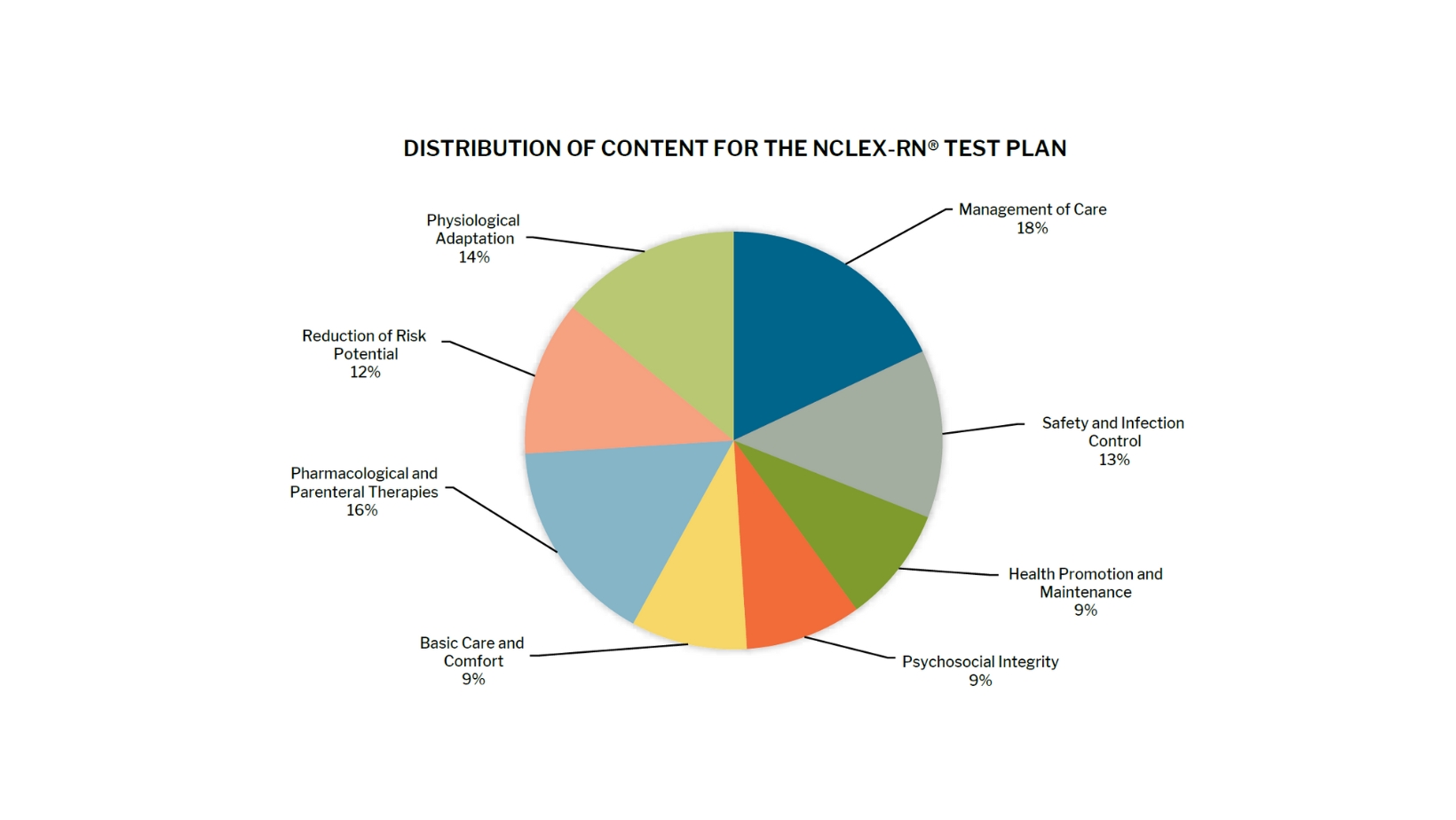
Distribution of Content
The NCLEX exam changed on April 1, 2023, to better emphasize clinical judgment. Here’s what you could expect on the new test.
Item Types
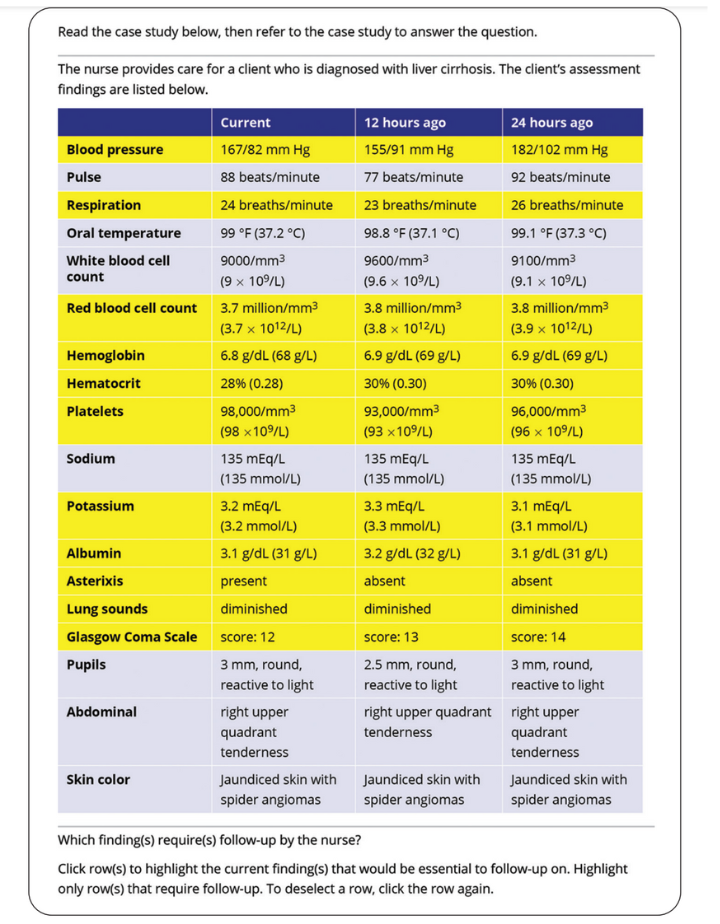
Highlighting items in which the applicant reads a case study, vignette, or passage and then highlights findings that would require follow-up by the nurse or health care provider.
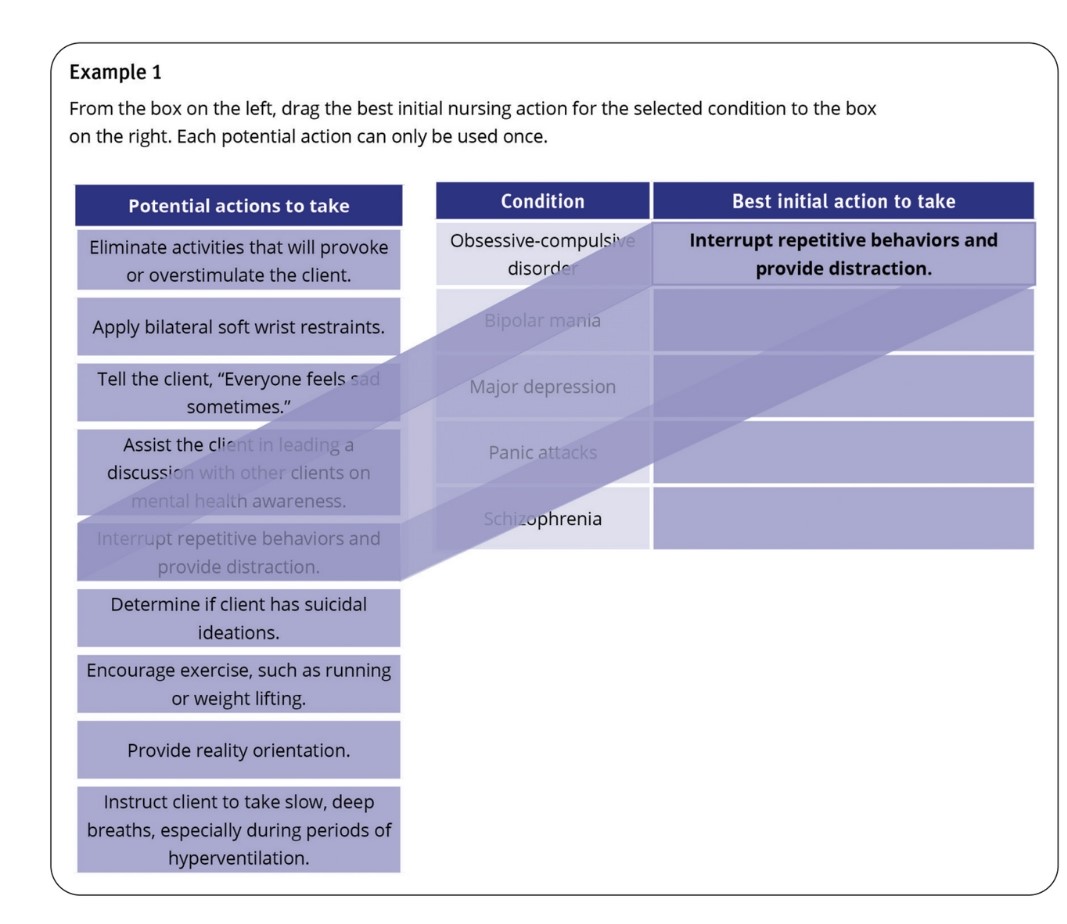
Extended Drag-and-Drop items in which the applicant uses the “drag-and-drop” function to complete different scenarios. For example, the applicant may be given a list of potential steps that could be taken to treat a client’s condition. The applicant then would place steps that are appropriate in the next column. Current drag-and-drop items on the NCLEX primarily ask the applicant to arrange steps in a sequential order (e.g., the correct sequence of steps when inserting a nasogastric tube). NGN drag-and-drop items may ask the applicant to “drag-and-drop” clients that require private rooms, or to “drag and drop” words that appropriately complete a sentence.
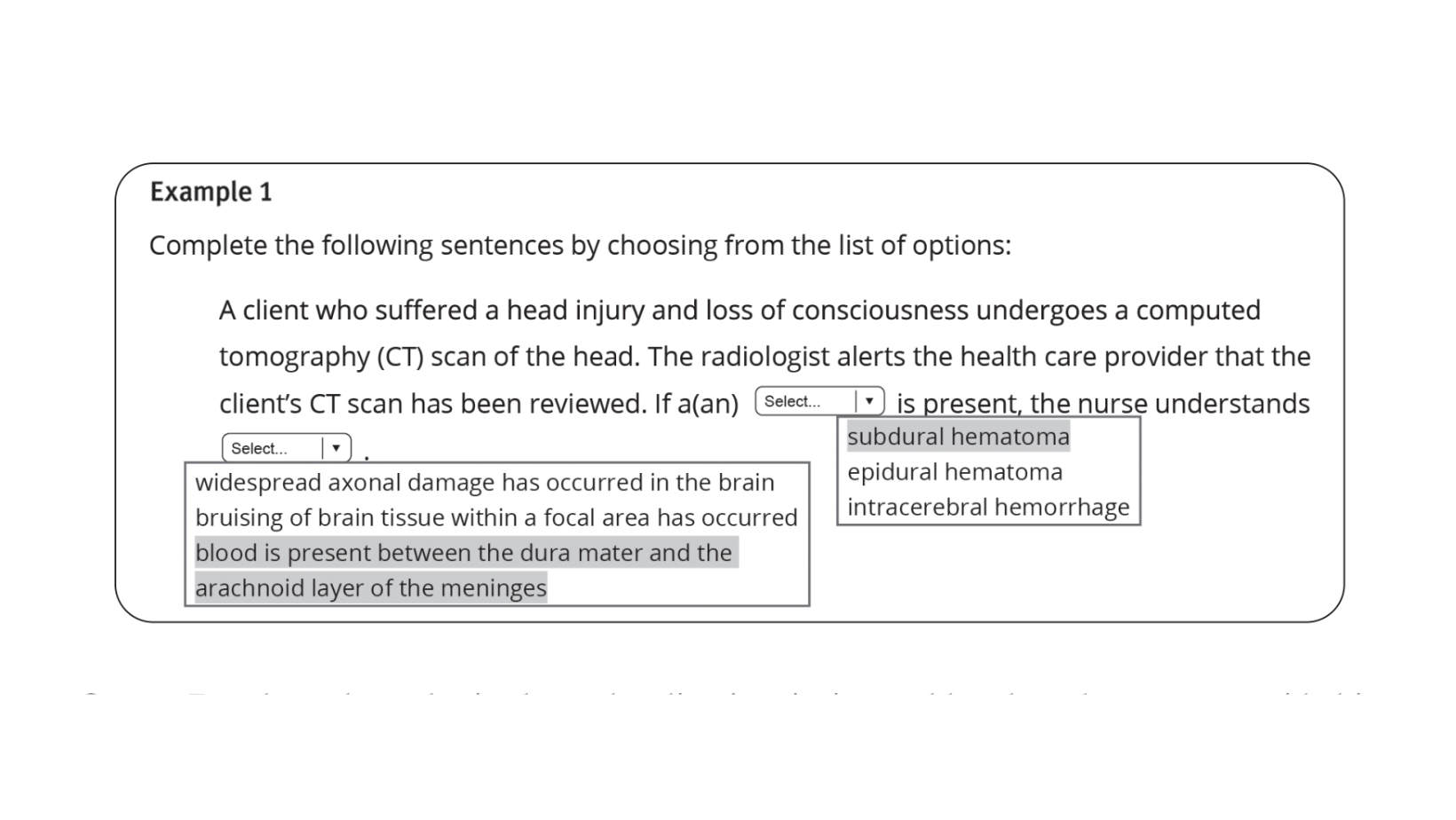
Cloze items, in which the applicant completes sentences or information in a chart by choosing a word or words from a dropdown list.
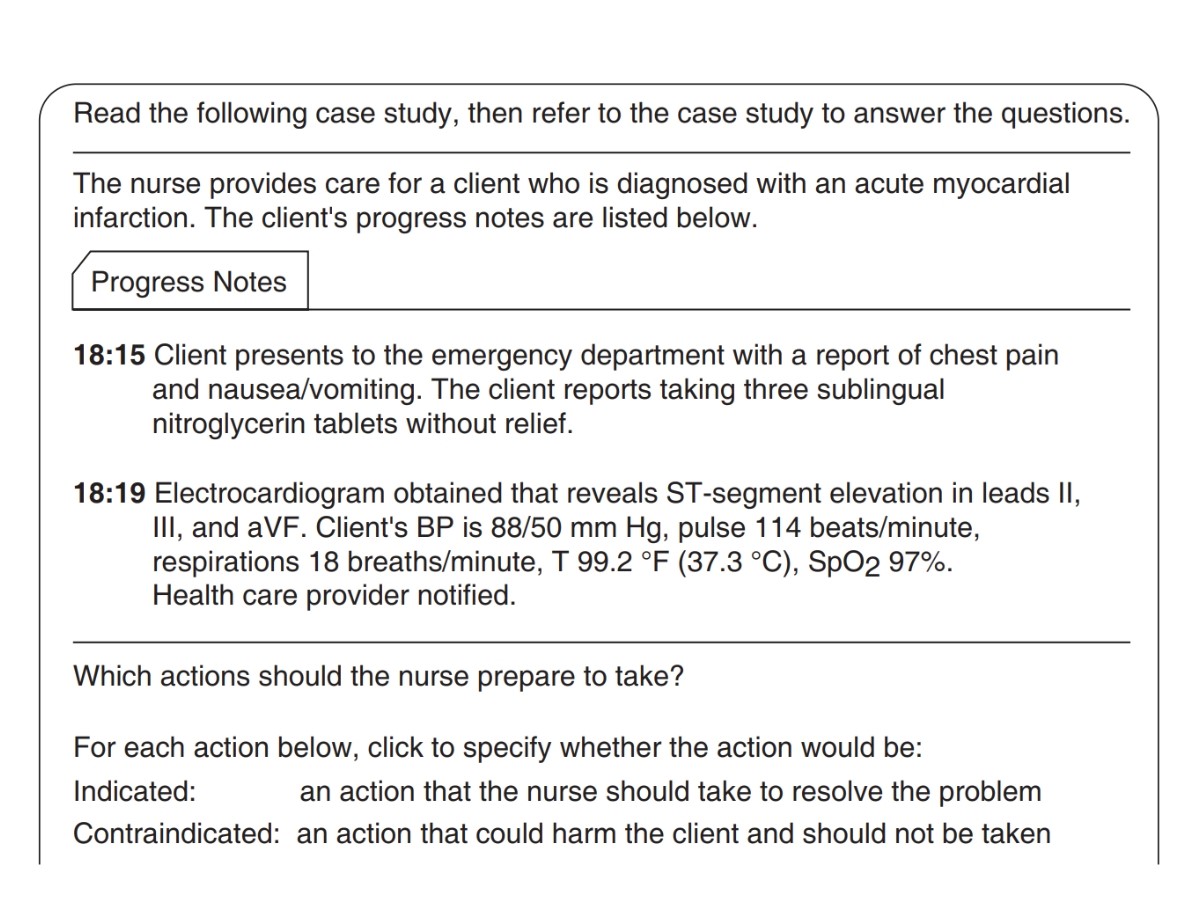
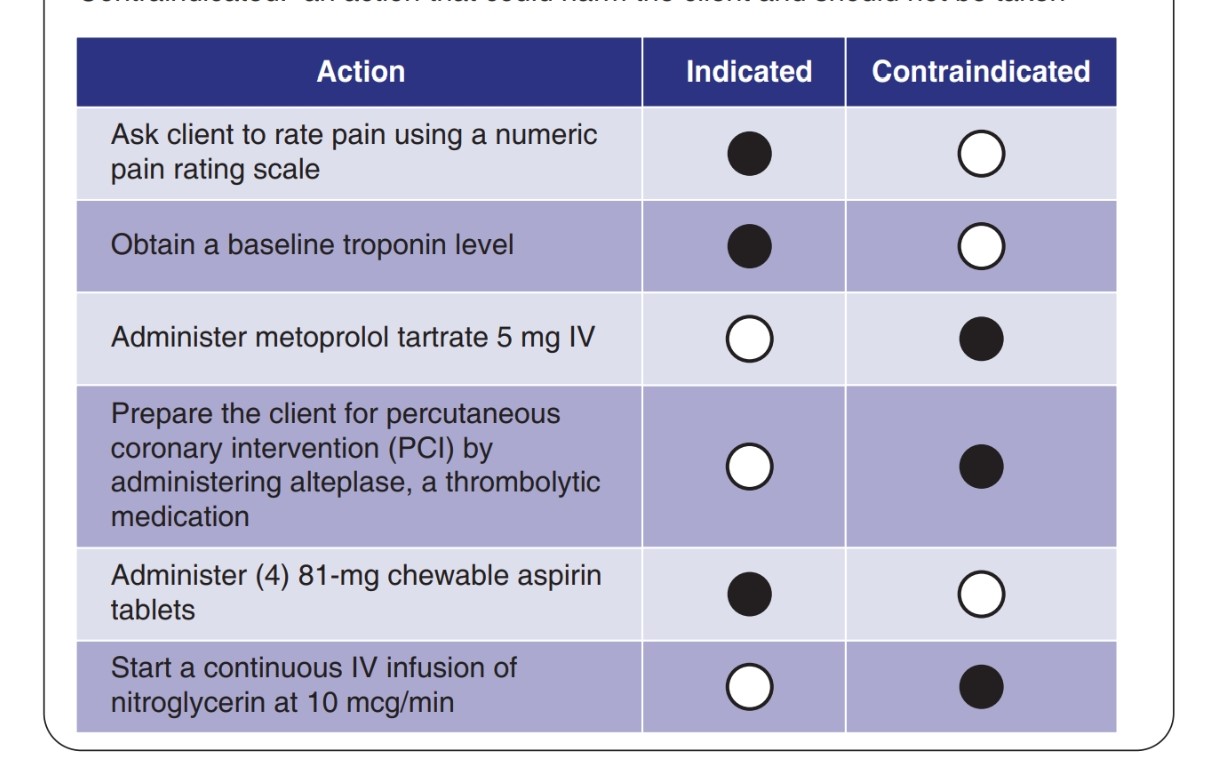
Matrix Items in which the applicant reads a case study, vignette, or passage and assigns a value to a group of responses (e.g., whether the action is indicated or contraindicated).
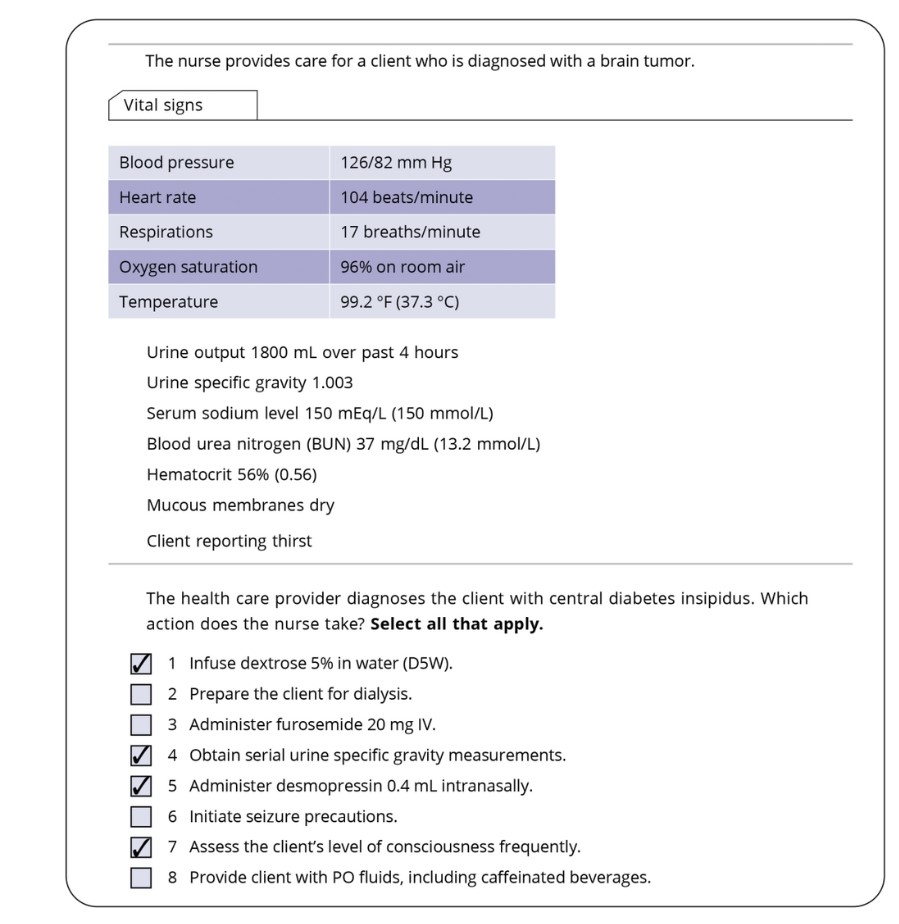
Multiple Selection (Select All That Apply “SATA”) items in which up to 10 options are available. Only 1 option may be correct, more than 1 option may be correct, or all options may be correct. Before answering the question, the exam candidate may have to read a passage first.
Bowtie items in which all 6 steps of the Clinical Judgment Measurement Model (CJMM) are addressed. A Bowtie item is literally shaped like a bowtie (broad at left and right, narrow in the middle), and it asks the candidate to choose responses from 3 distinct yet intertwined categories. After reviewing a case study, the candidate is asked to select, for example, the condition the client is most likely experiencing, actions to take, and parameters to monitor.
Trend items in which multiple steps of the CJMM are addressed. All trend items involve a time evolution (e.g., vital signs or laboratory results over time) within the case study or scenario, requiring an interpretation of changes. Trend items can incorporate any item type into the case study or scenario (e.g., Cloze, Matrix, etc.).
Trend items are also similar in layout to the unfolding case studies, with the stimulus on the left-hand side and the question on the right; however, each trend item is a standalone question. Trend items address multiple steps of the CJMM by having the candidate review information over time.
We have attached a Practice Simulator HERE, so you can get familiar with the new dynamics.