
📌 NCLEX Topic: Concealed Bleeding in Pregnancy
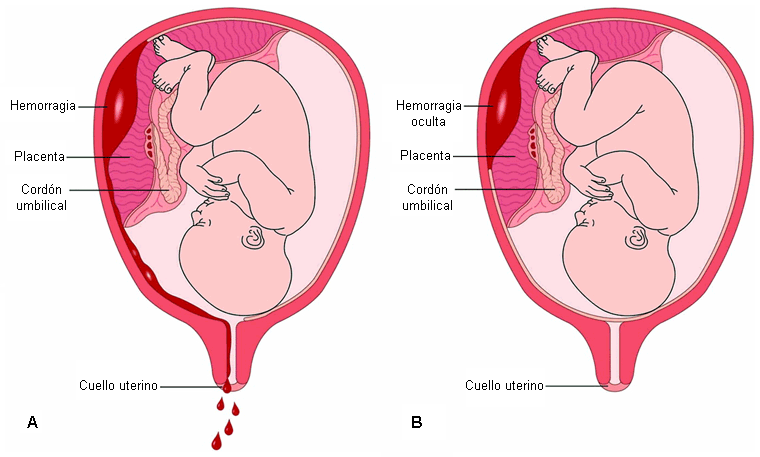
Key Concept:
Concealed bleeding occurs when blood accumulates inside the uterus without visible external bleeding. It is commonly associated with placental abruption and poses a severe risk to both the mother and fetus.
Causes & Risk Factors
- Placental abruption (most common cause)
- Trauma (e.g., car accident, domestic violence)
- Hypertension or preeclampsia
- Multiparity
- Cocaine use or smoking
- Previous history of placental abruption
Signs & Symptoms of Concealed Bleeding
✅ Maternal Findings:
- Sudden, severe abdominal pain (constant, not intermittent)
- Hard, board-like abdomen (uterine hypertonicity)
- Increase in fundal height (due to blood accumulation)
- Signs of hypovolemic shock (tachycardia, hypotension, pallor)
✅ Fetal Findings:
- Late decelerations on fetal heart monitoring (due to placental insufficiency)
- Decreased baseline variability (fetal distress)
- Absence of fetal movement (severe cases)
❌ What is NOT a sign of concealed bleeding?
- Heavy vaginal bleeding (this is seen in external hemorrhage)
- Early decelerations (associated with head compression)
Nursing Priorities & Interventions
🚨 Emergency Response for Suspected Concealed Bleeding:
- Assess maternal vital signs & monitor for signs of shock
- Perform continuous fetal heart monitoring
- Assess fundal height for unexpected increase
- Prepare for an emergency C-section if fetal distress is present
- Administer oxygen (8-10 L via face mask) to improve fetal oxygenation
- Establish IV access for fluid resuscitation & possible blood transfusion
- Monitor urine output (oliguria is a sign of hypovolemic shock)
- Educate the patient and family about emergency interventions