
Child Health
Key concepts related to Pediatric Nursing
- Growth and development: Pediatric nursing focuses on the unique growth and developmental needs of children. It’s important to understand the developmental milestones and differences in care needed for different age groups, from infancy to adolescence.
- Communication: Communication with pediatric patients and their families is critical for effective care. Pediatric nurses must be able to communicate with children at their developmental level and provide information in a clear, age-appropriate manner.
- Pediatric illnesses and conditions: There are many common pediatric illnesses and conditions that nurses should be familiar with, including asthma, diabetes, infectious diseases, and congenital abnormalities.
- Medication administration: Medication administration in pediatric patients requires special considerations, such as weight-based dosing and calculation, age-appropriate drug forms, and careful monitoring for adverse effects.
- Pain management: Pediatric patients experience pain differently than adults and require specialized pain management interventions. Nurses must be able to assess and manage pain in children effectively.
- Family-centered care: Pediatric nursing involves providing care that is family-centered, recognizing the important role that parents and other caregivers play in the child’s health. Nurses must work collaboratively with families to provide the best possible care.
- Safety: Pediatric nursing also focuses on promoting safety for children, including prevention of accidents and injuries, and identification and reporting of child abuse and neglect.
Newborns
Agpar stands for Appearance, Pulse, Grimace, Activity, and Respiration. Medical teams use this scoring system to make sure babies are healthy right after birth. Each category is score 0, 1, or 2 points, and the total is the Apgar score. A low score ay indicate the baby requires medical intervention.
A – Appearance (skin color)
This is an evaluation of the baby’s skin color. The medical team measures if the baby is blue or pale all over (0 points), blue at the extremities (1 point), or pink all over (2 points).
P – Pulse (heart rate)
During this evaluation, the medical team measures the baby’s heart rate. An absent heart rate scores 0 points. A slow heart rate of less than 100 beats per minute (bpm) scores 1 point. A fast heart rate of more than 100 bpm is considered normal and scores 2 points.
G – Grimace (reflex irritability/response)
To evaluate this category, the medical team checks if the baby lacks a response to stimulation (0 points), responds with a grimace (1 point), or responds by crying and pulling away (2 points).
A – Activity (muscle tone)
During this evaluation, the medical team asks if the baby is limp (0 points), if the baby has some joint movement (1 point), or if the baby shows active motion (2 points).
R – Respiration (breathing ability)
During this step, the medical team asks if the baby is failing to breathe (0 points), if the baby has a weak cry and slow breathing (1 point), or if the baby is breathing well and crying normally (2 points). A baby that has trouble breathing may show signs of respiratory distress syndrome (RDS).
Newborn Complications:
Meconium Aspiration
Meconium is the first stool of the newborn. When the meconium is passed before delivery, the fetus is at risk for meconium aspiration. The aspiration can occur in utero, or just after delivery when the infant takes their first breath and starts to cry. Meconium in the lungs causes very serious illness; pneumonia, pulmonary hypertension, and sepsis are all common. These infants become critically ill very quickly.
Assessment
If meconium aspiration is suspected, pertinent assessment will include:
Respiratory status:
- Accessory muscle use
- Breath sounds
- Grunting
- Nasal flaring
Assessment to determine if meconium has been passed in utero:
- Visible meconium in fluid/on infant
- Discolored or foul smelling amniotic fluid
- Discoloration of the cord
- Discoloration of the nails/tonge on the infant
Interventions
Very quick action is essential to the outcome.
- Suction immediately after birth – before they take their first breath.
- Intubation
- IV antibiotics
- IV fluids
Jaundice
Terminology
- Jaundice – elevated bilirubin level resulting in yellowing of the sclera, skin, and mucous membranes.
- Bilirubin – waste product produced during breakdown of red blood cells.
- Unconjugated (indirect) – The heme that is released from hemoglobin in the process of red blood cell breakdown is converted to unconjugated bilirubin. It is transported to the liver.
- Conjugated (direct) – Unconjugated bilirubin is converted to conjugated bilirubin in the liver. It is excreted in the stool.
Physiological Jaundice
- Jaundice that appears on day 2 or 3 of life.
- This is expected and not considered pathologic unless other issues arise.
- This is simply due to the normal transition from the placenta removing bilirubin,
- to the infant’s liver doing the work.
- Followed up outpatient with pediatrician.
Pathological Jaundice
- Jaundice that occurs within the first 24 hours of life.
- Serum bilirubin will be compared to normal value based on hours of life.
- Jaundice appearing in the first 24 hours indicates some problem or disease
- process that needs addressed.
- Could be an issue with the liver, or an ABO incompatibility
Kernicterus
Kernicterus is a type of brain damage that can result from high levels of bilirubin
in the blood.
- Complications of kernicterus:
- Cerebral palsy
- Hearing loss
- Problems with vision
- Problems with teeth
- Intellectual disabilities
Kernicterus is completely preventable! We must monitor for signs and symptoms
of jaundice early and treat promptly.
Treatment – phototherapy (Kernicterus)
- Helps break down bilirubin so it may be excreted in the feces.
- Must ensure the eyes and genitals are covered.
- Monitor the level and distance from the light if overhead therapy being used.
- Double, triple, and quadruple therapy depending on severity.
Pediatric Vital Signs
While there can be variations, given a child’s overall condition, the average vital signs for an infant are:
- heart rate (newborn to 1 month): 100 to 160 when awake
- heart rate (1 month to 1 year): 80 to 140 when awake
- (newborn to 1 month) respiratory rate: 35 to 55 times per minute
- (infant) respiratory rate: 30 to 40 times per minute
Blood pressure:
- neonate : 50 to 70 systolic blood pressure (top number)
- infant (1 to 12 months): 70 to 100 systolic
Toddler vital signs
After a child turns 1, their vital signs progress more toward adult values. From age 1 to 2, they should be:
- heart rate: 80 to 130 beats per minute
- respiratory rate: 20 to 30 breaths per minute
- blood pressure: 70 to 110 systolic
Preschool vital signs
When a child is 3 to 5 years old, their average vital signs are:
- heart rate: 80 to 110 beats per minute
- respiratory rate: 20 to 30 breaths per minutes
- blood pressure: systolic 70 to 110
School-age (6 to 12 years old)
The average vital signs of a child who is 6 to 11 years old are:
- heart rate: 70 to 100 beats per minute
- respiratory rate: 18 to 24 breaths per minute
- blood pressure: systolic 80 to 120
Adolescents (12+ years old and up)
Adolescent vital signs are essentially the same as those of an adult. By this time, heart and breathing muscles have developed to near-adult levels:
- heart rate: 60 to 100 beats per minute
- respiratory rate: 14 to 22 breaths per minutes
- blood pressure: systolic 110 to 120
Congenital Heart Defects
Congenital heart defects (CHDs) are structural abnormalities in the heart that are present at birth. These defects can affect the heart’s walls, valves, or blood vessels, and can lead to a variety of symptoms and complications.
Some of the most common types of CHDs that may be tested on the NCLEX RN include:
Ventricular septal defect (VSD)
This is the most common type of CHD, accounting for up to 30% of all cases. VSD is a hole in the wall between the heart’s lower chambers (the ventricles), which can cause blood to flow abnormally and lead to heart failure or other complications.
Signs and Symptoms of a Ventricle Septal Defect
“HOLE” in Ventricles
Heart Failure and pulmonary hypertension: difficulty breathing, fatigues with ease, fluid build-up (congested lungs, edema in extremities, sweating that’s clammy and occurs with activity like crying, activity, feeding etc.)
Often experiences lung infections (due to lung congestion from fluid)
Low growth rate and loss of weight (inability to eat and burns calories due to difficulty breathing and increased workload on the heart)
Extra heart sounds: holosystolic/pansystolic murmur (the mumur starts at S1 and goes into S2)…it may or may not be present at birth until pressure changes occur and is found at the lower left sternal border
Nursing Interventions and Treatments for VSD
Digoxin: causes the heart to pump stronger but at a slower rate….NURSE’S ROLE measure apical pulse for 1 full minute
- hold if apical pulse less than 60 in ADULTS, less than 70 in CHILD, less than 90-110 in INFANT
- monitor intake and output very closely (renal function must be normal so the mediation can clear the body and not build-up which would lead to toxicity)
- MONITOR potassium level….(hypokalemia increases digoxin toxicity)
- Watch heart rhythm, vomiting which can indicate toxicity for infants
- Digibind is the antidote
Diuretics: to help remove fluid….monitor intake and output, and electrolytes, especially potassium if taking Digoxin
ACE Inhibitors: lowers blood pressure, which will help decrease the pressure in the left ventricle and decrease the shunting of blood into the right ventricle
Atrial septal defect (ASD)
This is a hole in the wall between the heart’s upper chambers (the atria), which can allow oxygen-rich blood to mix with oxygen-poor blood and cause strain on the heart and lungs.
Types of ASDs: types depend on the location of the hole
- Ostium Secundum: a hole is found in the MIDDLE of the atrial septum….MOST COMMON!
- Ostium Primum: a hole is found near the location of the atrioventricular valves (tricuspid and mitral)…the bottom part of the atrial septum
- Sinus Venosus: a hole is found near the superior vena cava and right atrium.
Tetralogy of Fallot (TOF)
This is a combination of four heart defects that can lead to cyanosis (blue skin due to low oxygen levels), shortness of breath, and other symptoms.
What are the heart defects in tetralogy of fallot?
Remember the mnemonic: “RAPS”
- Right ventricular hypertrophy
- Aorta displacement
- Pulmonary stenosis
- Septal defect (ventricular)
Signs and Symptoms of Tetralogy of Fallot
“Afflict”
Activity (feeding, crying, playing) causes cyanosis “TET spells”… cyanosis, shortness of breath, increased breathing, fainting…think “activity intolerance”
- Nurse’s role with a “Tet spell”: knee-to-chest position, calm infant, and apply oxygen. Patient may need medication to calm or to increase systemic vascular resistance (IV fluids etc.)
Fingernail changes (clubbing due to hypoxia) noticeable at about 6 months
Fatigues or faints easily (especially during a “tet spell”….due to low oxygen levels)
Lift knees-to-chest position or squatting (children) WHY? squatting and the knee-to-chest position increases systemic vascular resistance, which will decrease the right to left shunting in the ventricles and helps increase oxygen levels.
Inability to grow properly due to hypoxemia
Cardiac: HARSH systolic murmur: WHY and WHERE? Due to pulmonary stenosis and is found left of the sternal border at the 2nd intercostal space (where you would find the pulmonic valve) and a systolic thrill may be present
Trouble feeding and thriving (not gaining weight, small for age, doesn’t achieve developmental milestones etc. )…think “failure to thrive”
Coarctation of the aorta
This is a narrowing of the main artery that carries blood from the heart to the body, which can lead to high blood pressure, heart failure, or other complications.
Signs and Symptoms of Coarctation of the Aorta
Signs and symptoms vary depending on the degree of narrowing….if severe: many babies will start to develop signs and symptoms suddenly (present with heart failure) shortly after birth when the bypasses from fetal circulation have closed, specifically the patent ductus arteriosus.
High pressure to the structures in the upper body and low pressure to the structures in the lower body will lead to:
- Nose bleeds
- Headaches (older children), babies very irritable
- Stroke
- Strong (bounding) pulse in the upper extremities
- Absent or very diminished pulses in femoral arteries/lower extremities (always want to check those on a newborn)
- Upper extremity blood pressure will be HIGHER than lower extremity (about 20 mmHg more when compared)….hence there will be hypertension in the upper extremities BUT not the lower
- Interscapular systolic murmur (auscultated on the left side of the back near the shoulder blades)
- Notching of the ribs due to collateral circulation (the body creates extra circulation to bypass the narrowing, which will be seen on the ribs and cause them to have a notched out appearance on a chest x-ray)
- Heart failure (decreased cardiac output with an enlarged left ventricle)
Transposition of the great vessels
This is a rare defect in which the main arteries leaving the heart are switched, leading to severe breathing difficulties and other complications.
Signs and Symptoms of Transposition of Great Arteries
Signs and symptoms are noticed after birth…severity depends on if other defects may be present as well, which will help with mixing of blood.
Signs and symptoms are present shortly after birth
CYANOSIS after birth that is mild to severe is present…..a bluish body and extremities and this is due to low oxygen levels!!
These babies are going to be extremely BLUE and will stay that way….depending on if they have other defects will determine the severity…some may have cyanosis that will majorly become worst.
Nursing Interventions and Treatment for Transposition of the Great Arteries
“SWAP”
Severe Cyanosis at birth that won’t resolve without medical intervention (*degree of cyanosis depends on if any other defects are present that may allow blood to mix and the cyanosis will continue to get worst as the ductus arteriosus and foramen ovale close off)
Watch heart rate, rhythm, respiratory status, oxygen levels, and prepare for intervention (prostaglandin E infusion, balloon atrial septostomy, and then open heart for an arterial switch procedure.
Alprostadil (prostaglandin E)…medication infusion given to keep patient ductus arteriosus open (normally would close at birth) to allow mixing of blood…this is the connection between the aorta and pulmonary artery
Procedures to correct:
- Balloon atrial septostomy…. TEMPORARY UNTIL SURGERY…. Performed during a heart cath: to enlarge a hole in atrial septum….catheter is inserted into the heart through a vessel to enlarge the formen ovale or an atrial septal defect already present
- WHY? this allows unoxygenated and oxygenated blood to mix and enter systemic circulation….temporary until surgery can be performed.
- Arterial switch procedure: open heart surgery where the pulmonary artery and aorta are switched back to where they should be along with their coronary arteries (performed within the first few weeks of life).
Cleft Lip and Cleft Palate
Cleft lip and cleft palate are birth defects that occur when the tissues of the lip and/or palate do not fuse properly during fetal development. These defects can occur separately or together, and can range in severity from a small notch in the lip to a complete separation of the lip and palate.
In terms of concepts that are commonly tested on the NCLEX RN related to cleft lip and cleft palate, nurses may be asked to identify risk factors that increase the likelihood of a baby being born with these defects. These risk factors include genetic factors, exposure to certain drugs or chemicals during pregnancy, and maternal alcohol use. Nurses may also be asked to identify appropriate interventions for infants with cleft lip and cleft palate, such as proper feeding techniques, surgical repair of the defects, and management of potential complications such as ear infections or hearing loss.
Clinical Manifestations
- Cleft. A split in the lip and roof of the mouth (palate) that can affect one or both sides of the face; a split in the lip that can appear as only a small notch in the lip or can extend from the lip through the upper gum and palate into the bottom of the nose; a split in the roof of the mouth that doesn’t affect the appearance of the face.
- Difficulty with feedings. The newborn easily becomes choked on liquids.
- Difficulty swallowing. The newborn has a hard time in swallowing, with potential for liquids or foods to come out the nose.
- Nasal speaking voice. Due to the split in the palate, the newborn has a nasal speaking voice.
Nursing interventions for the patient with cleft lip and palate are:
- Maintain adequate nutrition. Breastfeeding may be successful because the breast tissue may mold to close the gap; if the newborn cannot be breastfeed, the mother’s breast milk may be expressed and used instead of formula; a soft nipple with a cross-cut made to promote easy flow of milk may work well.
- Positioning. If the cleft lip is unilateral, the nipple should be aimed at the unaffected side; the infant should be kept in an upright position during feeding.
- Tools for feeding. Lamb’s nipples (extra long nipples) and special cleft palate nipples molded to fit into the open palate area to close the gap may be used; one of the simplest and most effective methods may be the use of an eyedropper or an Asepto syringe with a short piece of rubber tubing on the tip (Breck feeder).
- Promote family coping. Encourage the family to verbalize their feelings regarding the defect and their disappointment; serve as a model for the family caregiver’s attitudes toward the child.
- Reduce family anxiety. Give the family information about cleft repairs; encourage them to ask questions and reassure them that any question is valid.
- Provide family teaching. Explain the usual routine of preoperative, intraoperative, and post operative care; written information is helpful, but be certain the parents understand the information.
Complications
- Feeding difficulties
- Weight loss
- Failure to thrive
- Speech and language delays
- Hearing issues
- Ear infections
- Aspiration
Pyloric Stenosis
Pyloric stenosis is a medical condition that occurs in infants, where the opening between the stomach and small intestine is narrowed, preventing the passage of food. This results in vomiting and weight loss, and requires surgical intervention to correct.
In terms of NCLEX RN review, nurses may be tested on their ability to recognize the signs and symptoms of pyloric stenosis, which can include:
- Projectile vomiting
- Weight loss
- Decreased urination
- Dehydration
- Visible peristalsis (waves of stomach contractions)
- Hunger and irritability after vomiting
Nurses may also be tested on their understanding of the diagnostic process for pyloric stenosis, which typically includes a physical examination and imaging studies such as an ultrasound or upper gastrointestinal series.
When it comes to nursing interventions for pyloric stenosis, nurses may be tested on their ability to:
- Monitor the infant’s fluid and electrolyte balance
- Administer IV fluids as needed
- Prepare the infant for surgery, including preoperative teaching and emotional support for parents
- Provide postoperative care, including pain management, wound care, and monitoring for complications such as infection or bleeding
Nursing interventions are:
- Maintain adequate nutrition and fluid intake. If the infant is severely dehydrated and malnourished, rehydration with intravenous fluid and electrolytes is necessary; feedings of formula thickened with infant cereal and fed through a large-holed nipple may be given to improve nutrition; feed the infant slowly while he or she is sitting in an infant seat or being held upright.
- Provide mouth care. The infant needs good mouth care as the mucous membranes of the mouth may be dry because of dehydration and omission of oral fluids before surgery; a pacifier can satisfy the baby’s need for sucking because of the interruption in normal feeding and sucking habits.
- Promote skin integrity. The infant is repositioned, the diaper is changed, and lanolin or A and D ointment is applied to dry skin areas.
- Promote family coping. Include the caregivers in the preparation for surgery and explain the importance of added IV fluids, the reason for ultrasonographic or barium swallow examination, and the function of the NG tube and saline lavage; describe the surgical procedure to be performed; and explain what to expect and how long the operation will last.
Omphalocele
Is a congenital birth defect where the baby’s intestines and other abdominal organs protrude outside of the body through an opening in the belly button area. This condition requires surgical correction.
In terms of NCLEX RN review, nurses may be tested on their ability to recognize the signs and symptoms of omphalocele, which can include:
- A bulge or sac protruding from the belly button area
- Poorly developed abdominal muscles
- Other birth defects or chromosomal abnormalities
- Breathing difficulties
Nurses may also be tested on their understanding of the diagnostic process for omphalocele, which typically includes prenatal ultrasound and physical examination after birth.
When it comes to nursing interventions for omphalocele, nurses may be tested on their ability to:
- Provide supportive care, including maintaining a warm and moist environment to prevent hypothermia and dehydration
- Administer IV fluids and medications as ordered
- Monitor the infant’s vital signs, intake and output, and laboratory values
- Prepare the infant and family for surgical intervention, including preoperative teaching and emotional support
- Provide postoperative care, including pain management, wound care, and monitoring for complications such as infection or bleeding
Nursing interventions are:
Pre-op
- Keep exposed intestines moist
- Cover with sterile gauze soaked in saline
- IV fluids
- IV antibiotics
- Thermoregulation
Post-op
- Parenteral feeds
- Trophic feeds started enterally very gradually
- Monitor weight
- Very long hospital stay
Gastroschisis
Is a congenital anomaly of the abdominal wall where the intestines and other abdominal organs protrude through a hole in the abdominal muscles to the outside of the body. This typically occurs to the right of the umbilicus and is not covered by a membrane or sac. It is often diagnosed prenatally with ultrasound.
In terms of nursing care, the goal is to prevent infection and protect the exposed organs while preserving bowel function. Care for a newborn with gastroschisis includes immediate surgery after birth to return the intestines and organs to the abdomen and close the defect. The infant may require mechanical ventilation, fluid and electrolyte replacement, and parenteral nutrition until bowel function returns.
In addition to surgical management, nursing interventions for gastroschisis may include frequent monitoring of vital signs, assessments for signs of infection, and administration of antibiotics as prescribed. The nurse should also closely monitor the infant’s bowel sounds and stools, and work closely with the healthcare team to ensure adequate nutritional support.
Intussusception
Is a condition in which part of the intestine folds into itself, causing an obstruction of the intestinal lumen. This can lead to a blockage in the intestine, decreased blood supply to the affected area, and potential tissue damage. Intussusception is commonly seen in children who have cystic fibrosis, intussusception occurs most commonly at age 6 month. In addition to experiencing severe abdominal pain, tell what position the infant will assume. (Pull legs up to chest/abdomen)
Some common signs and symptoms of intussusception that may be tested on the NCLEX RN include sudden onset of severe abdominal pain, vomiting, and a “currant jelly” appearance of stools. Other signs may include lethargy, irritability, fever, and abdominal distention.
Nursing interventions for intussusception may include preparing the patient for diagnostic testing such as an ultrasound or CT scan, providing pain management, and monitoring vital signs. Treatment may involve non-surgical reduction of the intussusception or surgical intervention. In some cases, the patient may require IV fluids and nutritional support.
Medical Management
Unlike pyloric stenosis, intussusception is an emergency in the sense that prolonged delay is dangerous.
- Intravenous fluid. For all children, start intravenous fluid resuscitation and nasogastric decompression as soon as possible.
- Therapeutic enema. Therapeutic enemas can be hydrostatic, with either barium or water-soluble contrast, or pneumatic, with air insufflation; therapeutic enemas can be performed under fluoroscopic or ultrasonographic guidance; the technique chosen is not important as long as the radiologist performing the enema is comfortable with the method.
- Surgical reduction. If a nonoperative reduction is unsuccessful or if obvious perforation is present, promptly refer the infant for surgical care; risk of recurrence of the intussusception after operative reduction is less than 5%.
- Laparoscopy. Laparoscopy has been added to the surgical armamentarium in the treatment of intussusception; laparoscopy can be performed in all cases of intussusception; reduction of the intussusception, confirmation of radiologic reduction, and detection of lead points have all been reported.
It is important for nurses to monitor for signs of complications such as intestinal perforation, peritonitis, or sepsis, which may require prompt medical intervention. The major complication of intussusception is of the bowel, necrosis. Additionally, patient and family education is important to promote understanding of the condition and to help prevent future occurrences.
Hirschsprung’s Disease
Also known as congenital aganglionic megacolon, is a congenital disorder of the colon characterized by the absence of ganglion cells in the distal bowel. The ganglion cells are responsible for coordinating peristalsis, which is the coordinated movement of the bowel to move stool through the digestive tract. Without these cells, the colon becomes obstructed, leading to abdominal distention, constipation, and possibly vomiting.
Assessment:
1. In the neonate:
- No meconium passed
- Vomiting – bile stained or fecal
- Abdominal distention
- Constipation – occurs in all patients
- Overflow-type diarrhea
- Anorexia, poor feeding
- Temporary relief of symptoms with enema
2. Older child (symptoms not prominent at birth):
- History of constipation at birth
- Distention of the abdomen – progressive enlarging
- Thin abdominal wall with observable peristaltic activity
- Constipation – no fecal soiling, relieved temporarily with enema
- Failure to grow – loss of subcutaneous fat; appears malnourished; perhaps has stunted growth
- Stool appears ribbon like, fluid like, or in pellet form
- Anemia
In terms of nursing management, the focus is on relieving the bowel obstruction and preventing complications. This typically involves surgical intervention, such as a pull-through procedure or colostomy, to remove the aganglionic segment of the bowel and restore normal function. Prior to surgery, the patient may require bowel decompression through the use of enemas or other bowel-cleansing methods.
Postoperatively, the nurse will monitor the patient for signs of infection, hemorrhage, and bowel obstruction. The patient may require pain management and intravenous fluids to maintain hydration and electrolyte balance. The nurse will also provide education on proper ostomy care, if applicable, and help the patient and family adjust to the changes associated with the condition and treatment.
Epiglottitis
Is an inflammatory condition of the epiglottis, the flap of cartilage at the base of the tongue that prevents food and fluids from entering the trachea during swallowing. It is typically caused by a bacterial infection and can be life-threatening if not promptly treated.
Some key points to review for the NCLEX RN related to epiglottitis include:
- Symptoms: The hallmark symptoms of epiglottitis are rapid onset of fever, sore throat, and difficulty breathing or swallowing. The patient may sit in a tripod position and drool because of the difficulty swallowing.
- Diagnosis: The diagnosis of epiglottitis is based on a combination of clinical presentation, medical history, and diagnostic tests, such as X-rays or a laryngoscopy.
- Treatment: Treatment of epiglottitis typically involves immediate hospitalization and intravenous antibiotics to combat the bacterial infection. In severe cases, the patient may require intubation or a tracheostomy to maintain an open airway.
- Nursing care: Nurses play a critical role in monitoring the patient’s airway and vital signs, administering medications, and providing emotional support to the patient and family. It is important to maintain a calm and reassuring presence and to work quickly to facilitate emergency care.
- Prevention: Vaccination against Haemophilus influenzae type b (Hib) can prevent epiglottitis. Patients with a history of epiglottitis should also receive prophylactic antibiotics before any procedures that may introduce bacteria into the airway, such as dental work or upper respiratory tract surgery.
- Epiglottitis is spread via droplets, which harbors an infectious agent like bacteria.
- The most common cause of epiglottitis is caused by a bacteria that attacks the epiglottis called: Haemophilus influenza type B
Signs and Symptoms of Epiglottitis
“ADD AIR NURSE”
- Abnormal position to breathe….tripod position…How does it look? The child will be sitting up and positioned forward with the chin in air (helps open the airway) and the tongue may be sticking out.
- Dysphagia (difficulty swallowing)….lead to drooling
- Difficulty talking…voice soft or muffled….sore throat
- Apprehension
- Increased Temperature (HIGH fever)
- RAPID onset
- Nasal flaring
- Uses accessory muscles to breathe…airway restriction
- Retractions of chest
- Stridor (inspiratory)
- Epiglottis enlarged or swollen on x-ray of the neck
Respiratory syncytial virus (RSV)
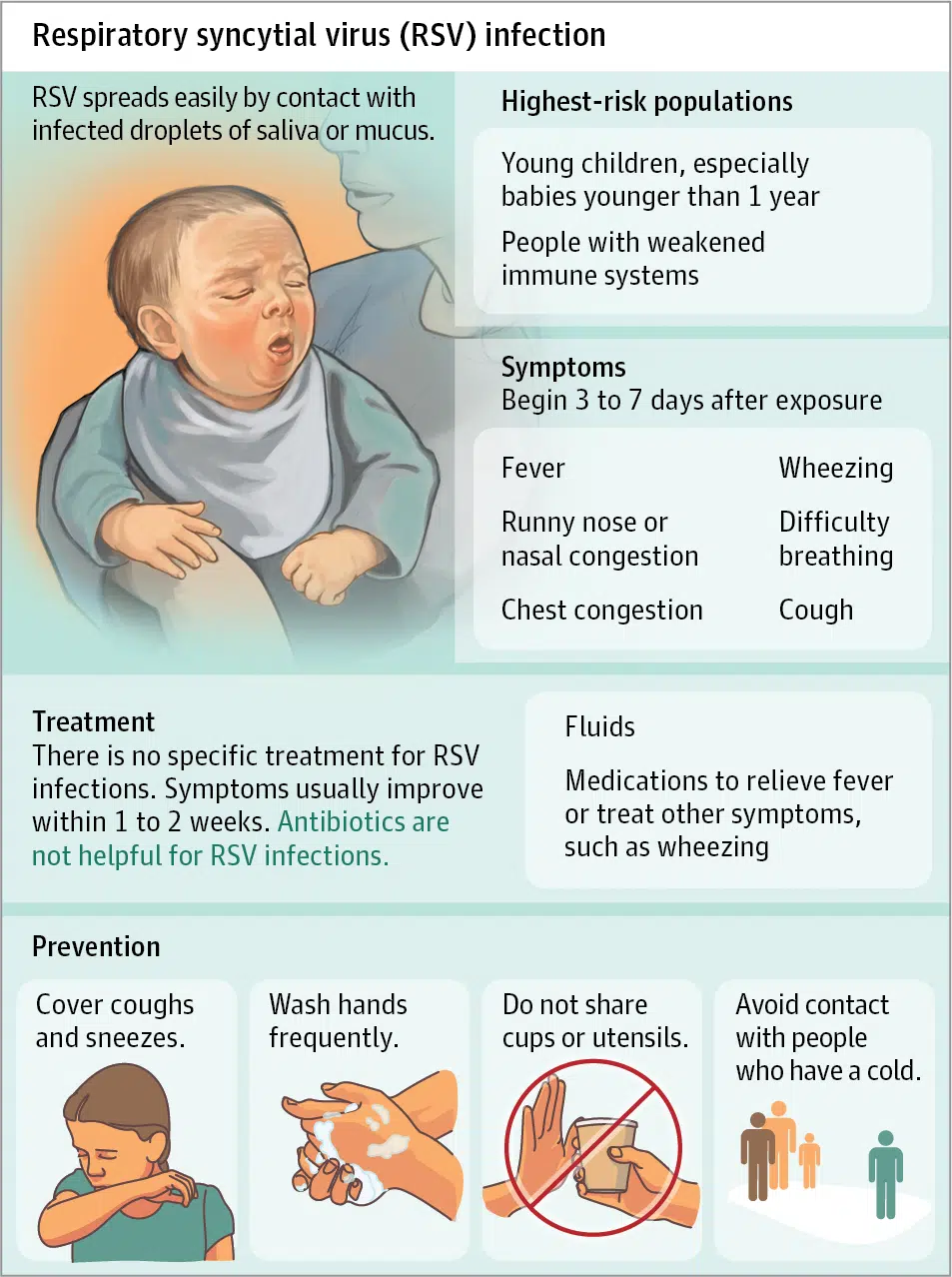
- Infection with respiratory syncytial virus which manifests primarily as bronchiolitis or viral pneumonia, is the leading cause of lower respiratory tract infections (LRTIs) in infants and young children.
- RSV can cause severe infection in some people, especially premature babies, older adults, infants and adults with heart and lung disease, or anyone with a very weak immune system (immunocompromised).
- Subsequently, RSV has been associated with bronchiolitis and LRTI in infants.
Pharmacologic Management
At least a subset of patients with RSV-related lower respiratory tract infection (LRTI) appears to benefit from:
- Bronchodilators. Bronchodilator therapy with beta-agonists is frequently used, though data on potential beneficial effects of such agents in this condition are conflicting.
- Antivirals. Ribavirin, a broad-spectrum antiviral agent in vitro, is licensed by the US Food and Drug Administration (FDA) for the aerosolized treatment of children with severe RSV disease.
Croup
Also known as laryngotracheobronchitis, is a respiratory illness that affects young children. It is a common condition that may be tested on the NCLEX RN exam. Here is a brief review of croup for the NCLEX RN:
Croup is caused by a viral infection that leads to inflammation of the larynx, trachea, and bronchi. This inflammation causes the airway to narrow, which can lead to a characteristic barking cough and difficulty breathing. Other symptoms may include fever, hoarseness, and stridor (a high-pitched, wheezing sound when breathing in).
Nursing interventions for a child with croup include providing humidified air to help ease breathing, administering medications such as corticosteroids to reduce inflammation, and monitoring the child’s respiratory status. In severe cases, hospitalization and more aggressive treatments such as oxygen therapy or intubation may be necessary.
It is important for the nurse to monitor for signs of respiratory distress, such as increased work of breathing, decreased oxygen saturation levels, or altered mental status. The nurse should also educate the parents or caregivers on how to recognize and respond to signs of worsening symptoms and when to seek medical attention.
Clinical Manifestations
Croup usually begins with nonspecific respiratory symptoms.
- Coryza. The attack may be preceded by coryza (runny nose) and hoarseness or by no apparent signs of respiratory irregularity during the evening.
- Fever. Fever is generally low grade (38-39°C) but can exceed 40°C.
- Respiratory symptoms. Within 1-2 days, the characteristic signs of hoarseness, barking cough, and inspiratory stridor develop, often suddenly, along with a variable degree of respiratory distress; symptoms are perceived as worsening at night, with most emergency room visits occurring between the hours of 10 pm and 4 am.
- Spasmodic croup. Spasmodic croup (recurrent croup) typically presents at night with the sudden onset of “croupy” cough and stridor.
In summary, croup is a common respiratory illness in young children caused by a viral infection. Nursing interventions focus on providing supportive care and monitoring respiratory status, and education is an important aspect of care for both the child and their caregivers.
Cystic fibrosis (CF)
Is a genetic disorder that affects the respiratory, digestive, and reproductive systems. It is caused by a mutation in the CFTR gene, which results in the production of thick and sticky mucus in the lungs and digestive system. This mucus can cause blockages in the airways and pancreatic ducts, leading to respiratory infections and problems with digestion.
Signs and symptoms of CF include chronic cough, difficulty breathing, wheezing, recurrent lung infections, poor growth and weight gain, and greasy, foul-smelling stools. CF can also cause infertility in males due to a blockage in the vas deferens, which carries sperm.
Treatment for CF focuses on managing symptoms and preventing complications. This may include airway clearance techniques, inhaled medications to open the airways, pancreatic enzyme replacement therapy to aid in digestion, and nutritional support to help with weight gain. Antibiotics may also be prescribed to treat lung infections.
Nursing interventions for CF may include monitoring respiratory status, administering medications as prescribed, encouraging proper nutrition and weight gain, providing education on airway clearance techniques, and promoting adherence to the treatment plan. Additionally, nursing care may involve providing emotional support to the patient and family, as CF can have a significant impact on quality of life.
On the NCLEX RN exam, questions related to CF may focus on signs and symptoms, complications, and nursing interventions for managing the disease. It is important for nurses to have a strong understanding of the pathophysiology and management of CF in order to provide safe and effective care for patients with this condition.